
Most people fly into Marseille, rent a car, and head straight to Aix-en-Provence or the Luberon. Totally understandable. But if you do that, you’ll drive past one of the most quietly fascinating corners of the entire South of France without even noticing. We’re talking about Lançon-de-Provence and the vast, shimmering stretch of water just below it : the Étang de Berre.
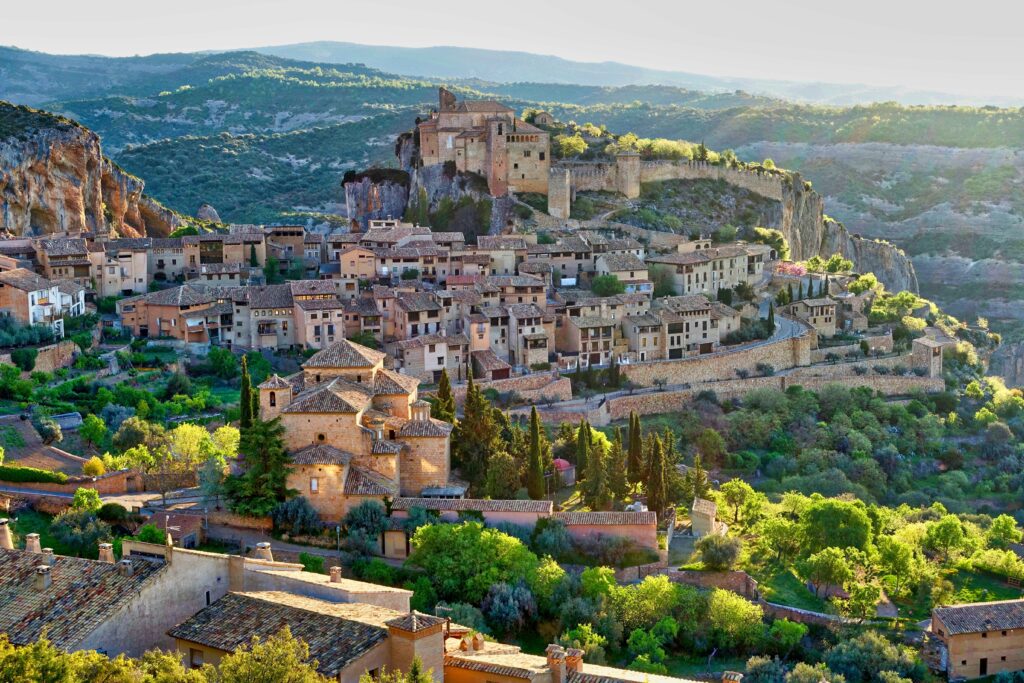
Honestly ? When I first heard the name, I pictured something industrial, a bit flat, not exactly postcard material. I was wrong. The village sits perched on a rocky spur with views that genuinely stop you mid-step. And the étang – a huge saltwater lagoon covering around 155 square kilometres – has this strange, almost cinematic quality at golden hour. If you want to plan a visit properly, the local tourism site is a solid starting point before you go.
So where exactly is Lançon-de-Provence ?
It’s in the Bouches-du-Rhône department, sitting between Salon-de-Provence to the north and the Étang de Berre to the south. About 40 minutes from Marseille by car, maybe 30 from Aix. Close enough to everything, yet somehow still off the tourist radar. Before you go, it’s worth checking lancon-provence-tourisme.fr for up-to-date practical information on local events, hiking trails and what’s open when you’re there.
The village itself has around 7,000 inhabitants. It’s not tiny, but it still feels like a proper Provençal town rather than a tourist trap. Market days, local boulangeries, old men playing pétanque. You know the vibe.
The old village : more impressive than it looks on a map
The vieux village is built on a limestone ridge, and the ruins of the medieval château at the top are worth the climb. It’s not a polished, restored monument – it’s real ruins, a bit crumbling, very atmospheric. The kind of place where you’re basically alone with the wind and a 360-degree view over the surrounding landscape.
From up there, you can see the Alpilles in the distance, the flat Crau plain stretching out, and yes – the Étang de Berre glinting below. That view alone justifies the stop.
The streets below are quiet, narrow, with those characteristic stone facades you find all over Provence. Nothing showy. But it has a texture that a lot of more famous villages have lost.
The Étang de Berre : misunderstood and genuinely beautiful
Let’s address the elephant in the room. The Étang de Berre has an industrial reputation – there are refineries and petrochemical plants on parts of its shore, no point pretending otherwise. But here’s the thing : the lagoon is vast, and large sections of its coastline are wild, natural, and seriously scenic.
The water changes colour depending on the light – sometimes deep blue, sometimes almost silver, sometimes a murky green that feels more Mediterranean than you’d expect. Flamingos actually pass through the area, especially on the western side near the Marignane flats. Flamingos. I find that weirdly exciting every time.
For birdwatchers, this stretch is genuinely underrated. For everyone else, it’s just a big, beautiful, slightly melancholy body of water that makes for great photography and even better picnic spots.
What to actually do in and around Lançon-de-Provence
There’s more here than the château. A few things worth knowing :
Hiking the Chaîne de la Fare : The limestone ridge that runs through the area offers several marked trails with views over both the lagoon and the Crau plain. Not technically demanding, but physically satisfying. Bring water in summer – it gets hot.
The Moulin de Daudet at Fontvieille : A short drive north, this windmill associated with the writer Alphonse Daudet is one of Provence’s most visited landmarks. Worth combining with a Lançon visit if you’re spending the day.
Salon-de-Provence : Just 15 minutes away, with a proper medieval castle (the Château de l’Empéri), a great Saturday market, and a very lively town centre. A natural complement to the quieter pace of Lançon.
Local markets and food : Lançon has its own market, and the region is serious about its olive oil, wine and local produce. The AOC Coteaux d’Aix-en-Provence covers this territory, so the rosé situation is… very manageable.
When to visit ?
Spring and autumn, without hesitation. May and June are perhaps the best months – the light is extraordinary, the lavender isn’t quite out yet (that’s more July), but the temperatures are comfortable and the crowds are minimal.
July and August work too, but the mistral can be fierce and the heat is serious. Not unpleasant if you’re prepared, but don’t underestimate it.
Winter visits have their own appeal – the village empties out completely, the light turns flat and almost Nordic, and the étang looks genuinely dramatic under a grey sky. Maybe not for everyone, but worth considering if you want Provence without the performance.
How to get there
By car is by far the most practical option. The A7 motorway passes close by. From Marseille-Provence airport, you’re looking at under 30 minutes. There are bus connections from Salon-de-Provence if you’re going car-free, but the timetables are limited.
Honestly, this is a destination that rewards having your own transport. The surrounding countryside – the Crau, the Alpilles, the étang shore road – is best explored at your own pace, stopping wherever the light looks good or a viewpoint appears.
Is it worth the detour ?
If your Provence itinerary is entirely built around Gordes, Les Baux and Roussillon, then no, Lançon probably won’t dislodge those. They’re iconic for a reason.
But if you’re the kind of traveller who gets more satisfaction from finding something real and slightly overlooked ? Then yes. Lançon-de-Provence offers exactly the kind of authentic, unhurried experience that too many parts of the South have traded away for tourism infrastructure.
The views are real. The village is real. The étang is genuinely spectacular in the right light. And you’ll almost certainly have it largely to yourself.
That, in itself, feels like a rare thing these days.